Module 1 – Introduction to Biology and Biomolecules
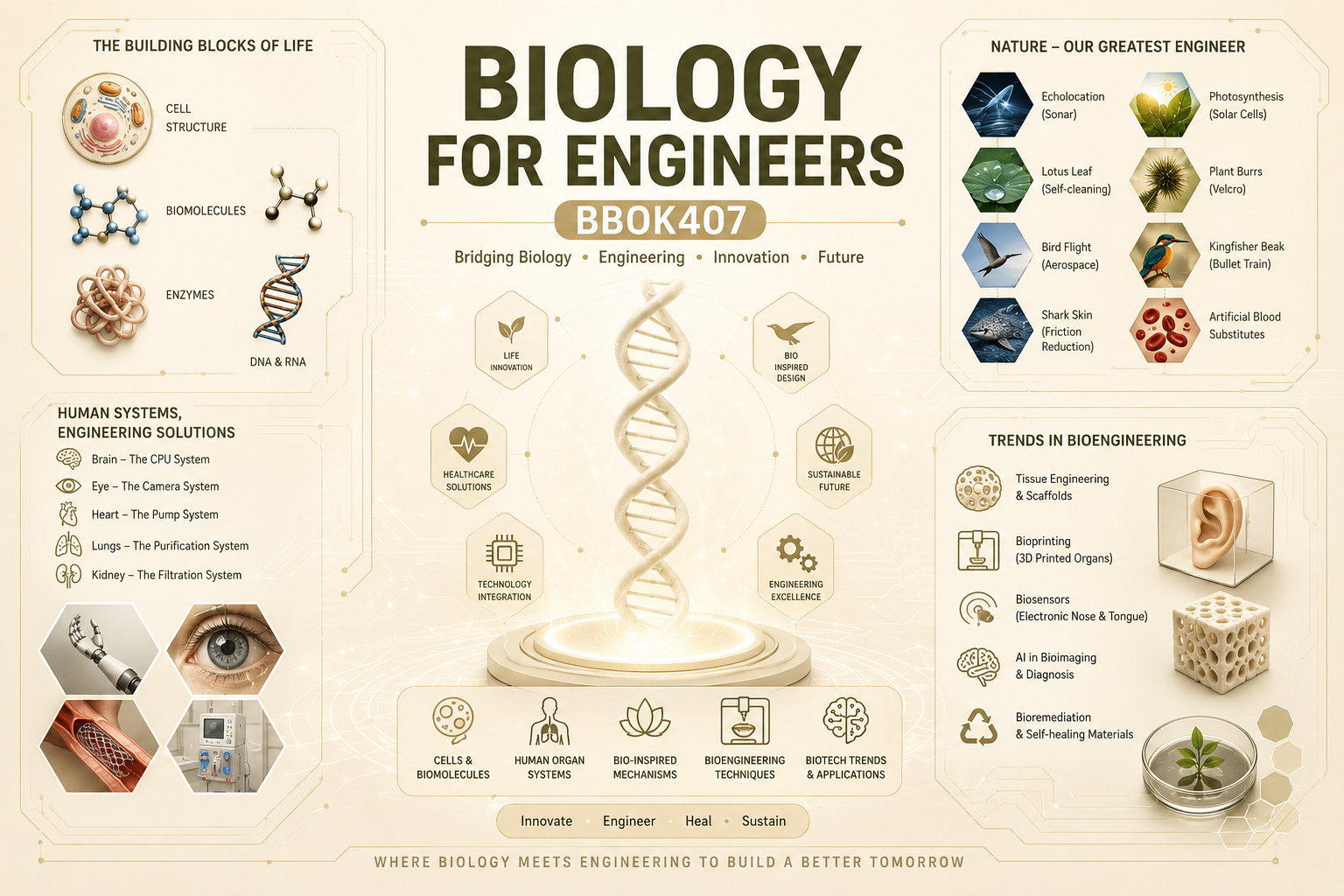
This module introduces the basics of biology and explains the structure and functions of cells, which are the fundamental units of life. Students learn the differences between plant and animal cells, as well as prokaryotic and eukaryotic cells. Important biomolecules such as carbohydrates, proteins, lipids, and nucleic acids are discussed along with their biological functions. Concepts of enzymes, vitamins, and hormones are also explained with practical significance. Stem cells and their modern applications in medicine and biotechnology are introduced. Overall, this module helps students understand the biological foundation behind living systems and modern bioengineering.
Module 2 – Biomolecules and Their Applications
This module focuses on the practical applications of biomolecules in engineering and healthcare fields. Students learn how carbohydrates are used in bioplastics and water purification systems. Applications of nucleic acids such as DNA fingerprinting and vaccines for diseases like COVID-19 and Rabies are discussed. Protein-based products like whey protein, plant-based meat alternatives, and enzyme applications in biosensors and bio-bleaching are also covered. Lipids and their role in biodiesel and detergents are introduced. Overall, this module connects biology with sustainable technologies and real-world innovations.
Module 3 – Human Organ Systems and Bio Designs
This module explains how human organs function similarly to engineered systems. The brain is compared to a CPU system, the eye to a camera, the heart to a pump, the lungs to purification systems, and kidneys to filtration systems. Students learn about medical technologies such as EEG, ECG, prosthetic robotic arms, pacemakers, ventilators, and dialysis systems. Disorders like Parkinson’s disease, cataracts, COPD, and kidney diseases are also discussed. The module highlights how engineering solutions improve healthcare and human life. Overall, it provides an interdisciplinary understanding of biology and biomedical engineering.
Module 4 – Nature Inspired Materials and Mechanisms
This module introduces bio-inspired technologies developed by observing nature. Students learn about echolocation used in sonars and ultrasonography, and photosynthesis-inspired photovoltaic systems. Natural designs like lotus leaf self-cleaning surfaces, Velcro from plant burrs, shark skin-inspired swimsuits, and kingfisher-inspired bullet trains are discussed. Applications of artificial blood substitutes are also introduced. The module explains how engineers copy natural systems to solve modern technological problems. Overall, it encourages innovation through nature-inspired engineering concepts.
Module 5 – Trends in Bioengineering
This module focuses on modern advancements and future trends in bioengineering. Students learn about tissue engineering, scaffolds, bioprinting, and 3D printing of organs like skin, bones, and ears. Concepts such as electrical nose, electrical tongue, DNA origami, and biocomputing are introduced. AI applications in disease diagnosis and bioimaging are also discussed. The module further explains self-healing bioconcrete and bioremediation techniques for environmental protection. Overall, this module highlights how biology and technology together are shaping the future of healthcare, food science, and sustainable engineering.