Human Stress Detection Using Machine Learning
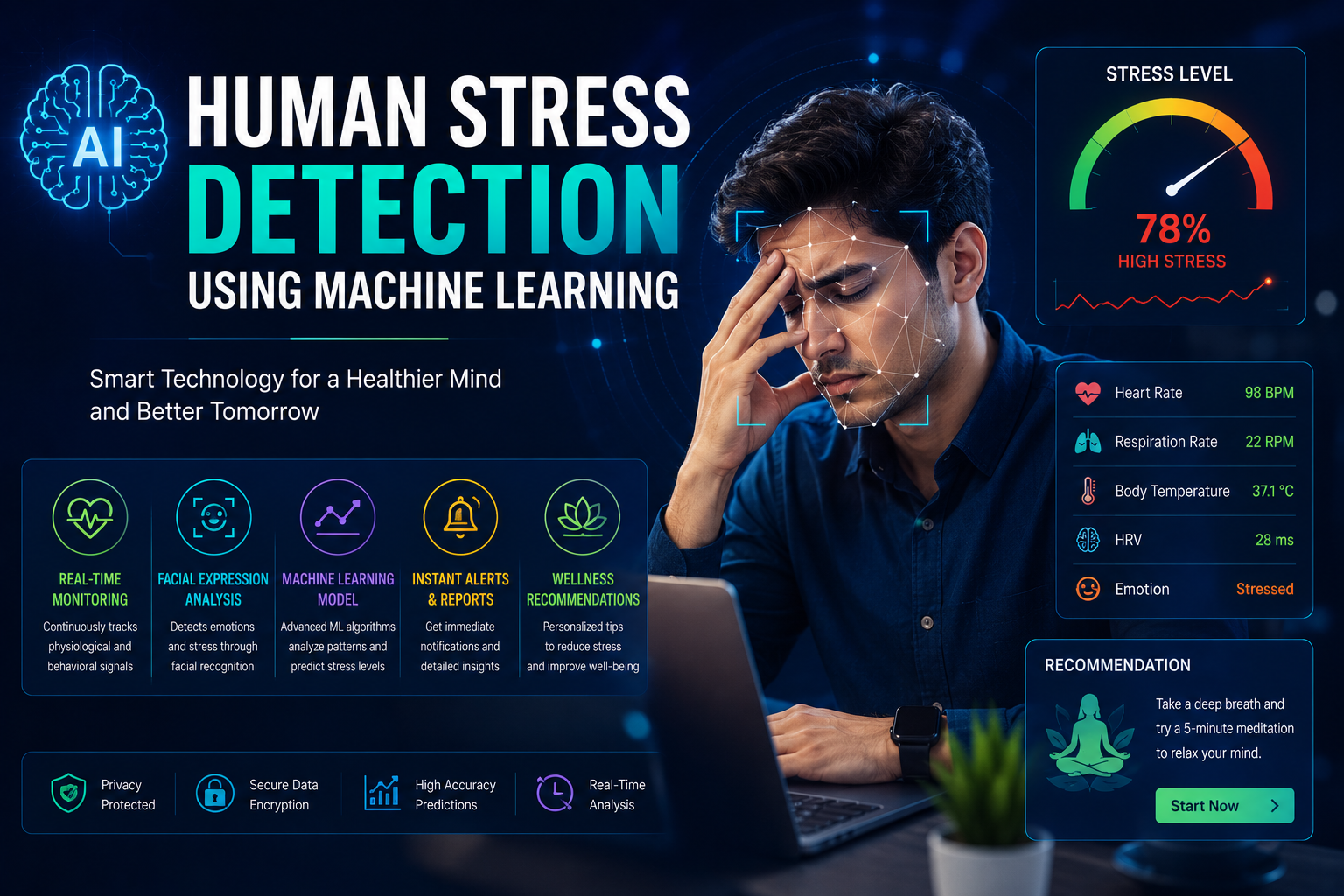
The Human Stress Detection Using Machine Learning system is an intelligent healthcare and wellness application designed to detect and analyze human stress levels using Artificial Intelligence and Machine Learning techniques. The system monitors physiological signals, facial expressions, behavioral patterns, or sensor data to identify stress conditions accurately and efficiently. It helps individuals, healthcare professionals, and organizations monitor mental well-being and take preventive actions before stress affects health and productivity.
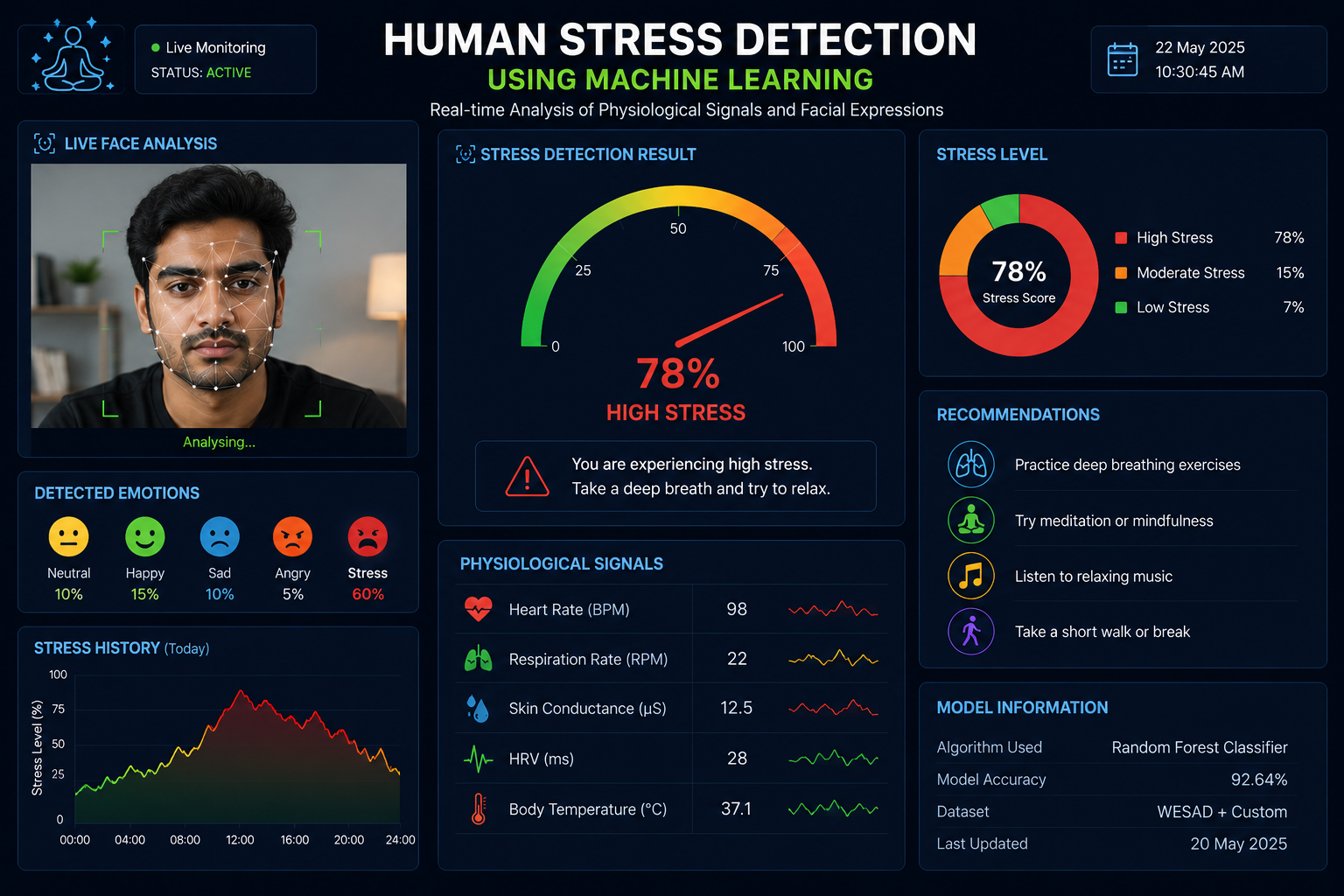
The system works by collecting input data such as heart rate, body temperature, facial emotions, sleep patterns, voice signals, or wearable sensor data. Machine Learning algorithms analyze these patterns and classify the stress level into categories such as low stress, moderate stress, or high stress. Advanced models are trained using real-world datasets to recognize stress-related behavioral and physiological changes with high accuracy.
One of the major features of the Human Stress Detection system is real-time monitoring and analysis. The AI model continuously processes the incoming data and provides instant stress predictions with graphical reports and confidence scores. The system can also generate recommendations such as relaxation techniques, meditation suggestions, breathing exercises, or lifestyle improvements to help users manage stress effectively.
The application uses technologies like Machine Learning, Deep Learning, Computer Vision, and Data Analytics to improve prediction accuracy and user experience. Facial emotion recognition techniques can analyze expressions such as sadness, anger, fatigue, and anxiety, while sensor-based analysis can evaluate physical stress indicators. This combination of AI technologies creates a smart and reliable stress monitoring platform.
The Human Stress Detection system is highly beneficial in healthcare, corporate environments, educational institutions, fitness monitoring, and mental wellness applications. It helps reduce mental health risks, improves emotional awareness, and supports preventive healthcare solutions. The system can also be integrated into wearable devices, mobile applications, and smart healthcare systems for continuous monitoring.